
Create a Viral Brand Character Your Audience Remembers
What if people recognized you before they even read your name?
That's not a fantasy. That's a strategy — and it's exactly what a viral brand character does for your business.
I've spent over 30 years in luxury brand marketing, working with names like Chanel, Tiffany & Co., Bulgari, and Ray-Ban. I've watched how the most iconic brands in the world create instant recognition — not through endless advertising, but through a consistent, memorable visual identity that travels everywhere they go.
Now, with AI imagery tools, that same strategy is available to every small business owner, creator, and entrepreneur. And it doesn't require a studio, a photographer, or a six-figure budget.
Here's exactly how to build yours.
What Is a Viral Brand Character — And Why Do You Need One?
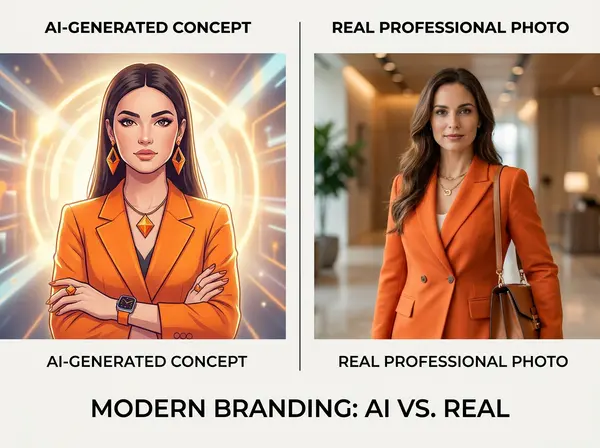
A viral brand character is not a cartoon mascot. It's not a logo. It's a consistent visual identity — a version of you (or your brand persona) that shows up in every piece of content you create, instantly recognizable, always on-brand.
Think of it this way: when someone scrolls past your post in 2 seconds, what makes them stop? Not your caption. Not your hashtags. Your visual signature.
When people see my content, they see orange — my blazer, my bag, my accessories. They don't need to read my name. They already know it's me. That's not luck. That's a system I've built deliberately over three years.
And here's the proof: using this approach on Bridge Unleashed, my bridge card game education platform, I grew from 300,000 monthly views to 1.8 million in just three weeks. Same character. Same color system. Different content types.
According to brand character research, visual brand mascots increase engagement rates by up to 62% on social media platforms compared to generic branded content Visual Content. When your audience can identify you in less than a second, you've already won half the battle.
The 3 Elements of a Recognizable Brand Character
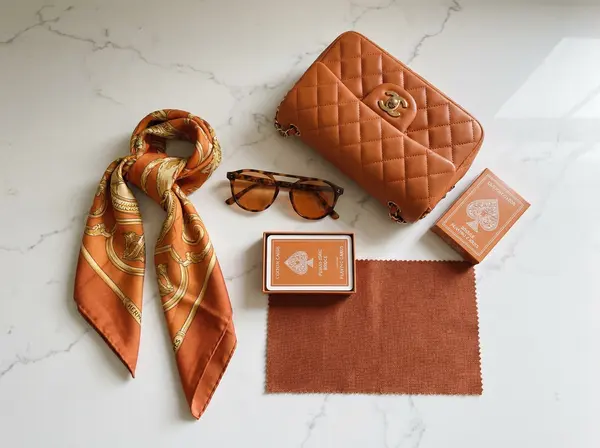
You only need three things to build a brand character that works:
1. A Signature Color
Choose one color and own it everywhere. Every post, every platform, every context. When people see your color, they see you — before they read a single word.
My color is Power Orange (#C4713B). It shows up in my blazer, my bag, my graphics, my AI-generated images, and my real-life photos. When someone sees orange in their feed, they think of me. That's not an accident. That's the goal.
Action step: Pick ONE color today. Not two. Not "earth tones." One color. Then audit your last 12 posts — does it show up consistently?
2. Consistent Props and Accessories
Your character needs a visual signature beyond color. Think of 3–5 props or accessories that appear in every visual you create. These become your fingerprint.
Mine: Chanel bag, cat-eye glasses, Hermès scarf, and recently — bridge playing cards. These items appear whether I'm posting AI-generated content or a candid photo taken at a conference.
According to ACGX's brand character research, AI-powered brand ambassadors with consistent visual elements generate 3x higher recall rates than those without signature props ACGX.
Action step: List your 3–5 signature props. They should feel natural to who you are — not forced or costume-like.
3. Context Variety
Here's where most people get it wrong. They create one style of content and repeat it endlessly. Your character needs to travel — showing up in different scenes, different contexts, different worlds — while always looking unmistakably like you.
Teaching content. Travel content. Behind-the-scenes content. Event content. Conference content. Industry content. Same character, different worlds.
Top 5 Mistakes People Make When Building Brand Characters
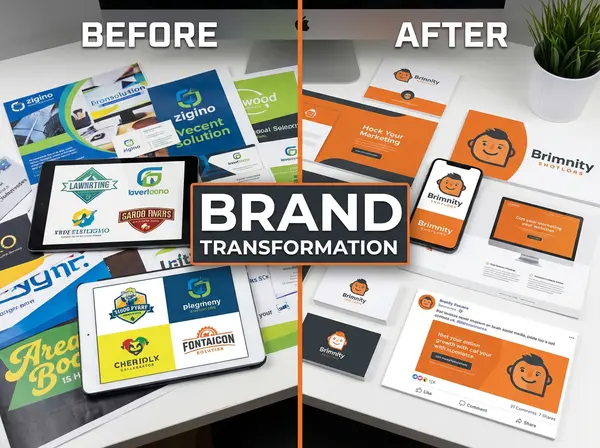
Before we dive deeper into execution, let's address the most common pitfalls I see entrepreneurs make when creating their brand characters:
1. Choosing Too Many Colors
The biggest mistake? Thinking you need a "palette." You don't. You need ONE dominant color that becomes synonymous with you. Pink for Barbie. Red for Coca-Cola. Orange for me. Pick one and commit.
2. Overusing the Character Everywhere
Brand fatigue is real. According to research on mascot implementation, placing your character in every single touchpoint can lead to audience exhaustion and even irritation Visual Content. The sweet spot? Use your AI character for about one-third of your content, not 100%.
3. Creating Without Strategy
Random AI-generated images won't build a brand. You need a content calendar that deliberately places your character in strategic scenarios that reinforce your brand message and expertise.
4. Ignoring Real-Life Integration
Your AI character should mirror your real-life visual identity. If your character wears orange but you show up to events in black, the disconnect confuses your audience and weakens brand recognition.
5. Forgetting Brand Voice Alignment
Your character's visual identity must match your brand's personality. A luxury consultant's character should exude sophistication. A fitness coach's character should radiate energy. Misalignment creates cognitive dissonance that damages trust.
The "Steal Like an Artist" Method — How I Build Scenes
Here's my most-asked-about technique: I don't invent original scenes from scratch. I borrow them.
I find content that's already working — a viral TikTok pose, a fashion editorial, an iconic ad — and I recreate the energy of that scene using my own character. Same composition, same vibe. My brand, my props, my color.
This is not copying. This is creative borrowing — the same technique used by every great artist, filmmaker, and brand since the beginning of visual storytelling.
Example 1: The "Built Different" Recreation
I found a viral post featuring a woman in a WEIRDO sweater with a distinctive seated pose and checkered backdrop. I recreated the same scene with my character in orange pants and white sunglasses, with "BUILT DIFFERENT" on the jacket. Same energy. My brand.
Example 2: The Pink Aesthetic Reimagined
I saw Simovska's viral TikTok — pink aesthetic, gallery wall, Eames chair, Siamese cat, Vogue magazine. I recreated the scene with my character: orange blazer, white sunglasses, my own branded "Social Media + AI News of the Day" magazine instead of Vogue, and a spaniel instead of a Siamese cat.
Her post had 14,100 likes. Mine reached a completely new audience — and they knew immediately it was me.
The formula is simple:
Reference concept + Your character = Original branded content
This approach leverages what content researchers call "visual familiarity with novel context" — your brain recognizes the composition pattern (which triggers engagement) while seeing fresh branded content (which builds your unique identity).
Your Character Is Only 1/3 of the Plan
Here's the part most people miss.
Your AI-generated character is a tool — a powerful one — but it should represent only about one-third of your total content. The other two-thirds? Real you.
My content strategy looks like this:
1/3 AI character and avatar content— polished, editorial, highly shareable
1/3 Real you— candid photos, event content, behind-the-scenes moments
1/3 Educational and value content— teaching, insights, tips
And here's the key: even in your "real" photos, wear your signature color. Put on the glasses. Carry the bag. The recognition system works because it's consistent across all your content — not just the AI-generated pieces.
In 2026, imperfect and authentic beats polished and generic every single time. Done is better than perfect. Your audience wants to see the real person behind the brand — and when they can instantly recognize you in a candid conference photo just as easily as in a designed graphic, you've built something truly powerful.
AI brand experts at Convai note that the most successful brand character implementations blend AI-generated content with human interactions, creating a seamless experience that builds trust rather than undermining it Convai.
How to Build Your Character This Week (Free Tool)
You don't need to figure this out alone. I've built a free tool that walks you through the entire process:
👉Get the Viral Character Creator GPT
Answer three questions about your brand, and you'll receive a custom character concept built specifically for your ideal customer avatar — ready to use in any AI imagery tool.
Here's your three-step action plan:
Step 1: Pick your 3 brand elements
Your signature color, your 3–5 props, your one core personality trait.
Step 2: Use the GPT to generate your character prompt
This is the description you'll use in Midjourney, Adobe Firefly, or any AI image generator.
Step 3: Generate your first 5 scenarios this week
Teaching, travel, lifestyle, behind-the-scenes, and one "steal like an artist" recreated scene.
The Results Speak for Themselves
I've used this exact system to create enterprise-level AI video content for Renesas and Blackstone Consulting. I've grown Bridge Unleashed from 300K to 1.8 million monthly views in three weeks. And I've helped countless small business owners and creators build visual identities that stop the scroll — without a studio, a team, or a massive budget.
The barrier to entry has never been lower. The barrier to consistency is where most people quit.
Don't quit. Build the system. Own your color. Show up — in AI and in real life — as unmistakably, recognizably, powerfully you.
Conclusion
Your brand character is waiting to be built. And the best time to start is right now — before your competitors figure this out.
Ready to get started? Grab the free Viral Character Creator GPT and have your character concept in minutes:
👉lensonsocialai.com/viral-character-creator
And if you want to go deeper — AI imagery strategy, content systems, and full brand buildouts — that's exactly what we do at Lens on Luxury. Let's talk.
Frequently Asked Questions
How long does it take to create an AI brand character?
You can create a basic AI brand character concept in minutes using tools like the Viral Character Creator GPT. However, developing a fully consistent visual identity across all platforms typically takes 2-4 weeks of implementation, including selecting your signature color, defining props, and generating your first set of content scenarios.
Do I need expensive software to create an AI brand character?
No. Free AI image tools like ChatGPT's image generator or affordable options like Midjourney ($10-30/month) work perfectly. The investment is minimal compared to hiring photographers or designers. Small businesses can build professional brand characters with tools costing less than $50/month.
Can I use my AI brand character alongside real photos of myself?
Absolutely — and you should. The most effective content strategy uses AI-generated characters for about one-third of your content, with the remaining two-thirds being real photos and educational content. Wearing your signature color and accessories in real photos maintains consistency and builds authentic connection with your audience.
How do I maintain brand consistency across different social media platforms?
Focus on three core elements: one signature color that appears in every post, 3-5 consistent props or accessories, and context variety. Your character should be instantly recognizable whether it appears on Instagram, LinkedIn, TikTok, or your website. The visual signature remains the same while the content adapts to each platform.
What's the difference between a brand character and a logo?
A logo is a static symbol. A brand character is a dynamic visual identity that can appear in unlimited scenarios — teaching, traveling, working, celebrating — while remaining instantly recognizable. Characters create emotional connection and personality in ways logos cannot. They travel with your content and build familiarity through repetition.
Is using AI-generated content considered inauthentic?
Not when done strategically. Today's audiences understand and accept AI tools as part of the creative process. The key is balancing AI-generated imagery with real content and authentic storytelling. When your audience sees both your AI character and real photos of you wearing the same signature elements, it reinforces authenticity rather than diminishing it.
How can small businesses use brand characters for local marketing?
Brand characters work exceptionally well for local businesses because they create memorable recognition at community events, in local advertising, and across digital platforms. Use your character in location-specific content — showcasing your city's landmarks, neighborhood culture, or local events — to build regional recognition while maintaining a professional, scalable visual identity.
What if my signature color or style needs to change as my brand evolves?
While consistency is crucial for recognition, brands do evolve. If you need to pivot your visual identity, do it intentionally and all at once rather than gradually. Announce the rebrand to your audience, maintain one or two signature elements for continuity, and commit fully to the new direction. Evolution is natural — just make it a strategic decision, not an accident.
About the Author
Tracey Bauer is an AI marketing strategist and brand consultant with over 30 years of experience working with luxury brands including Chanel, Tiffany & Co., Bulgari, and Ray-Ban. She specializes in helping businesses leverage AI tools to build recognizable visual identities and scalable content systems. Tracey is the founder of Lens on Luxury and creator of the Viral Character Creator GPT.
Connect: Lens on Luxury | Viral Character Creator