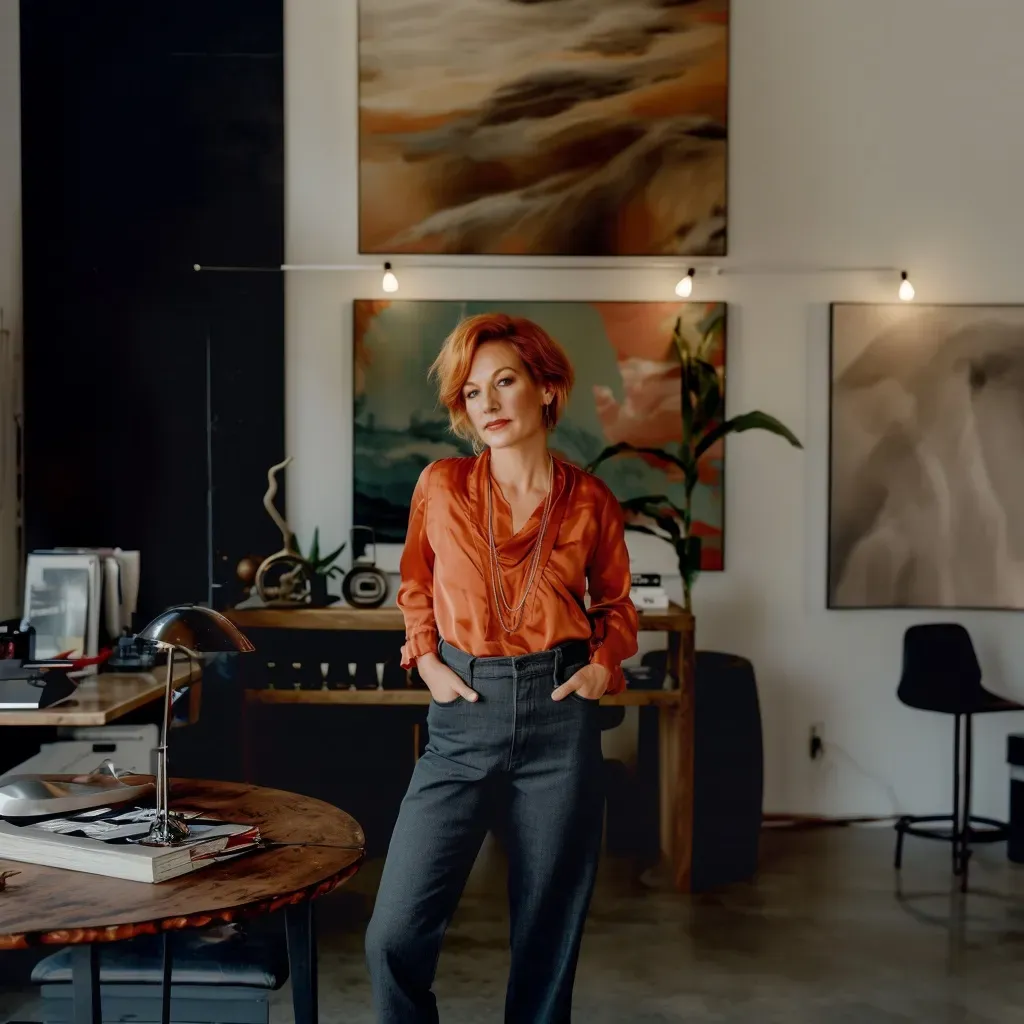
From $600 to Luxury: Tracey Bauer's 33-Year Optical Journey
What does it take to transform $600, a one-way ticket to California, and unwavering determination into a thriving digital marketing agency serving luxury optical brands nationwide? For Tracey Bauer, founder of Lens on Luxury, the answer lies in 32 years of frontline optical industry experience, strategic pivot-taking, and early adoption of artificial intelligence technology. From working as an optician in San Francisco to managing wholesale operations for 25 years, Tracey identified a critical gap: luxury optical practices were overpaying for generic marketing that failed to capture their brand sophistication. Today, Lens on Luxury provides AI-powered, HIPAA-compliant marketing solutions specifically designed for high-end eyewear businesses, dental practices, and luxury service providers across California and beyond.
The $600 Beginning: When Engineering Dreams Meet Optical Reality
From Worcester Polytechnic to California With Nothing But Potential
Growing up in upstate New York, I followed the expected path for academically gifted students: Worcester Polytechnic Institute in Massachusetts, studying chemical engineering. The formulas made sense on paper. The career trajectory seemed secure. But at 20 years old, sitting in another organic chemistry lab, I realized something fundamental—I was chasing someone else's definition of success, not my own.
The decision to leave engineering behind wasn't impulsive. It was clarifying. I moved to California with exactly $600 in my pocket, no job lined up, and zero connections in the state. What I did have was curiosity about how businesses actually worked and a willingness to learn from the ground up.
My entry into the optical industry happened almost accidentally. I answered a classified ad for an optometrist's office in Montclair, California, initially hired for bookkeeping and administrative tasks. But unlike many employees who punch in and punch out, I started asking questions: Why are we paying this much for frames? Could we negotiate better vendor terms? What if we restructured our inventory management?
The Negotiation That Changed Everything
Within six months, I'd renegotiated vendor contracts, saving the practice tens of thousands of dollars annually. I wasn't trained in procurement—I simply approached it logically, researching market rates, building relationships with sales representatives, and understanding leverage points in wholesale pricing.
That optometrist saw something in me beyond administrative competence. He encouraged me to consider optometry school at UC Berkeley, seeing potential I hadn't fully recognized in myself. I ultimately chose a different path, but that encouragement planted a seed: I belonged in this industry, and I had something valuable to contribute.
The San Francisco optical scene in the early 1990s was unlike anywhere else in the country. The city's fashion-forward culture, combined with its concentration of affluent professionals, created demand for eyewear that transcended mere vision correction. Glasses were fashion statements, expressions of personal brand, symbols of discernment. This was luxury retail happening through a medical device, and I was fascinated by that intersection.
32 Years in Optical: From Technician to Strategic Advisor
Mastering Every Role in the Industry
My journey through the optical industry wasn't linear—it was comprehensive. I intentionally sought diverse experiences, understanding that mastery comes from seeing systems from multiple perspectives.
As an Optician (5 years): I learned the technical foundations—measuring pupillary distance, understanding lens materials and coatings, fitting frames to face shapes. But more importantly, I learned to read people. The same frame looks entirely different on different individuals, and helping clients discover their authentic style requires intuition as much as technical knowledge.
Working with San Francisco's diverse population taught me that luxury isn't about price tags—it's about attention, expertise, and making people feel genuinely seen. A customer spending $800 on frames wasn't just buying eyewear; they were investing in how they presented themselves to the world.
As a Frame Buyer (3 years): This role transformed my understanding of the optical business. I traveled to trade shows in Milan, Paris, and New York, meeting independent frame designers and major brand representatives. I developed the eye for what would sell in specific markets—understanding that what worked in San Francisco's Financial District differed from what resonated in Berkeley or Marin County.
Frame buying is where art meets commerce. You're predicting trends 9-12 months in advance, committing substantial capital to inventory based on intuition and market analysis. The frames that moved fastest weren't always the most objectively beautiful—they were the ones that matched your customer demographic's aspirational identity.
As Practice Manager (7 years): Managing an optical practice revealed the overwhelming complexity facing optometrists and ophthalmologists. These doctors trained for years to provide exceptional patient care, yet found themselves drowning in administrative burdens: inventory management, staff scheduling, insurance negotiations, marketing, vendor relationships, regulatory compliance.
I watched brilliant clinicians burn out not from patient care but from business management they never wanted to do in the first place. Many were spending $3,000-5,000 monthly on generic marketing agencies that produced templated content indistinguishable from any other healthcare practice. The marketing completely missed what made their practices special—the curated frame selection, the personalized service, the luxury retail experience happening within a medical environment.
This realization would eventually become the foundation of Lens on Luxury, though I didn't know it yet.
The Wholesale Years: Understanding the Industry at Scale
25 Years Building Relationships Across California
Transitioning to wholesale optical represented a pivotal career shift. For 25 years, I worked with optical practices throughout California, giving me unprecedented perspective on what separates thriving practices from struggling ones.
In wholesale, you see patterns that individual practice owners can't see. You observe which marketing strategies actually drive patient volume, which frame lines generate the highest margins, which operational inefficiencies plague even successful practices. You understand seasonal trends, regional preferences, and how external factors—economic shifts, insurance changes, fashion trends—ripple through the industry.
I built relationships with over 200 practices during this period. These weren't transactional relationships—I became a trusted advisor. Practice owners would call me with questions beyond product orders: Should I open a second location? How do I compete with online retailers? What do successful practices do differently for social media?
The San Francisco Bay Area optical market taught me lessons applicable everywhere: Luxury clients aren't simply seeking the cheapest option—they're seeking expertise, curation, and experience. They'll pay premium prices when they perceive genuine value. But they're also sophisticated consumers who can instantly detect inauthentic marketing or mediocre service.
Identifying the Critical Gap in the Market
By 2020, the pattern had become impossible to ignore. My most successful clients—practices generating $1M+ annually—were all struggling with the same issue: marketing agencies that didn't understand the luxury optical sector.
These practices were paying $4,000-8,000 monthly to digital marketing firms producing content that could apply to any optometry practice anywhere. The messaging focused on "comprehensive eye exams" and "accepting most insurance plans"—entirely missing the luxury positioning that defined these practices.
Meanwhile, online retailers like Warby Parker were disrupting the industry through sophisticated digital marketing, while independent luxury practices relied on outdated Yellow Pages thinking in the social media age.
The gap was obvious: luxury optical practices needed marketing partners who understood their industry, appreciated their brand positioning, and could communicate their value proposition to affluent consumers who valued quality over price.
The Birth of Lens on Luxury: When AI Meets Optical Expertise
Early Adoption of AI Technology
In 2021, I made a decision that would prove transformative: investing hundreds of hours in artificial intelligence training. Most optical professionals were debating whether Instagram was worth the effort. I was exploring how AI could revolutionize content creation, customer relationship management, and marketing automation.
The timing proved fortuitous. As AI tools matured rapidly between 2021-2024, I was already proficient, having experimented with early versions of GPT-3, learning prompt engineering, understanding AI limitations and capabilities.
This wasn't about replacing human creativity—it was about augmenting human expertise. I could combine my 32 years of optical industry knowledge with AI's ability to generate customized content at scale. A marketing campaign that previously required 20 hours could now be produced in 4 hours with higher quality and better targeting.
Building a SaaS Solution for Luxury Practices
Lens on Luxury officially launched in late 2022 as a specialized marketing agency with an unusual foundation: genuine optical industry expertise combined with cutting-edge AI implementation.
Our approach differed fundamentally from traditional agencies:
1. Industry-Specific Understanding: We don't need clients to explain why trunk shows matter, how independent frame lines differ from mass-market brands, or why medical reimbursement rates affect frame pricing. We lived it.
2. Luxury Brand Positioning: Our content reflects the sophistication of luxury optical practices. We understand that these clients aren't competing on price—they're competing on expertise, selection, and experience. Marketing must reflect that positioning.
3. AI-Powered Efficiency: We leverage AI tools for content generation, SEO optimization, image creation, and analytics—delivering enterprise-quality marketing at small business prices.
4. HIPAA-Compliant Infrastructure: Healthcare practices face regulatory requirements that general marketing agencies often ignore. We built our systems from day one to meet HIPAA compliance standards, ensuring client data and patient information remain protected.
5. Long-Term Partnership Model: Unlike agencies focused on maximizing monthly retainers, we prioritize sustainable client relationships. When our clients succeed, they refer colleagues. Our business model depends on genuine results, not just impressive proposals.
Beyond Optical: Expanding Into Luxury Small Business
The Transferable Luxury Marketing Framework
An interesting evolution occurred as Lens on Luxury established its reputation in optical: business owners from other luxury sectors started reaching out.
A boutique dental practice in San Francisco's Nob Hill asked if we could apply our approach to cosmetic dentistry marketing. An interior designer specializing in high-end residential projects wanted help positioning her business for Marin County clientele. A luxury skincare clinic sought marketing that matched their premium service experience.
The common thread? These businesses shared challenges identical to luxury optical practices:
Competing against budget competitors in ways that didn't diminish their premium positioning
Attracting affluent clients willing to pay for exceptional quality
Communicating expertise without seeming pretentious
Building brand recognition in competitive local markets
We realized our methodology wasn't optical-specific—it was luxury-specific. The principles that work for an independent optical boutique in San Francisco's Union Square apply equally to a high-end salon in Pacific Heights or a bespoke tailoring shop in the Marina District.
Today, Lens on Luxury serves clients across multiple industries: optometry and ophthalmology practices, dental offices specializing in cosmetic procedures, medical aesthetics clinics, luxury retail boutiques, professional service providers (attorneys, accountants, consultants), and design professionals.
What unites them isn't their industry—it's their market positioning and the type of clients they serve.
The Lens on Luxury Team: Specialists in Every Discipline
Building an Agency on Expertise, Not Overhead
Traditional marketing agencies operate on a model I rejected from the beginning: large office spaces, extensive overhead, junior employees executing work sold by senior partners. This model requires high monthly retainers to cover costs, often delivering mediocre work because experienced professionals aren't touching client accounts.
Lens on Luxury operates differently. We're a distributed team of specialists, each exceptionally skilled in their domain:
Social Media Strategists: Experts in Instagram, Facebook, LinkedIn, and Pinterest, understanding how to create engagement that converts browsers into clients. They know luxury consumers scroll past obvious ads but engage with authentic stories and educational content.
Automation Specialists: Professionals who implement AI-powered workflows, CRM systems, email marketing automation, and chatbots—reducing administrative burden while improving client communication responsiveness.
Graphic Designers: Artists who understand luxury aesthetics, creating visual content that looks professional rather than DIY. They know when minimalism communicates sophistication and when rich detail demonstrates mastery.
Website Developers: Technologists who build sites optimized for conversions, mobile performance, and search visibility. They understand that luxury websites must load quickly while looking stunning—technical excellence supporting aesthetic excellence.
SEO Specialists: Experts in multi-platform optimization, understanding how to make luxury businesses visible in Google search, Google Maps, YouTube, and Pinterest—everywhere potential clients seek information.
This structure allows us to provide specialized expertise at each client touchpoint while keeping costs reasonable. Clients receive senior-level attention on every project because we don't have organizational layers diluting talent.
Why San Francisco Shaped My Business Philosophy
The City That Understands Innovation
San Francisco's unique culture profoundly influenced Lens on Luxury's development. This city has always embraced innovation while maintaining appreciation for craftsmanship. Tech startups operate blocks from third-generation family businesses. Venture capitalists wear luxury watches to meetings in casual hoodies.
This duality—innovation + tradition—defines how we approach client work.
We leverage cutting-edge AI technology (innovation) to help traditional businesses tell their story (tradition). We use modern marketing platforms (innovation) to communicate timeless values like expertise, quality, and personalized service (tradition).
San Francisco taught me that luxury consumers are often early adopters. They're not intimidated by technology—they expect businesses to use it intelligently. A luxury optical practice that still uses paper appointment books in 2025 signals they're not keeping pace with client expectations.
But they also value human connection. The technology should enhance the relationship, not replace it. The best luxury businesses use AI to handle routine tasks so humans can focus on the nuanced interactions that build loyalty.
Lessons From 32 Years: What I'd Tell My Younger Self
7 Principles That Guided My Journey
1. Expertise Compounds Over Time: Every role I held—optician, buyer, manager, wholesale representative—built knowledge that eventual clients would value. Nothing was wasted time, even positions I later left.
2. Relationships Outlast Transactions: The vendors I treated fairly in 1995 referred clients to Lens on Luxury in 2023. Business is relationships extended over decades.
3. Identify Gaps Others Miss: The most profitable business opportunities exist where sophisticated clients face inadequate solutions. Luxury optical practices needed marketing that matched their positioning—someone just needed to build it.
4. Early Adoption Creates Advantage: Investing time learning AI in 2021 positioned Lens on Luxury ahead of competitors still debating whether to use ChatGPT in 2024.
5. Niche Specialization Beats General Competence: We're not a "full-service marketing agency for all businesses." We're specialists in luxury brand marketing with optical industry depth. Specificity attracts ideal clients better than breadth.
6. Small Business Success Requires Obsession: The businesses that thrive don't treat their company as a job—they're genuinely obsessed with serving their clients excellently. That passion is visible to customers and creates competitive moats.
7. Your Background Is Your Advantage: I initially worried that my unconventional path—engineering dropout turned optical professional—would seem unfocused. Instead, it became a differentiator. I bring analytical thinking from engineering plus frontline experience from optical into marketing strategy.
The Future of Luxury Marketing in an AI-Powered World
What's Coming for Small Luxury Businesses
The next 3-5 years will determine which luxury small businesses thrive and which struggle to survive. AI isn't replacing human expertise—it's amplifying it. Businesses that embrace AI strategically will operate with efficiency previously available only to large enterprises.
Here's what I'm implementing for Lens on Luxury clients in 2025:
AI-Powered Personalization: Marketing that adapts to individual customer preferences in real-time. A potential client browsing progressive lenses sees different content than someone interested in luxury sunglasses.
Predictive Analytics: Using historical data to forecast appointment demand, inventory needs, and seasonal trends—helping practices make smarter business decisions.
Automated Customer Journeys: From initial website visit through appointment booking, service delivery, follow-up, and referral generation—creating seamless experiences that feel personal while being systematically managed.
Voice-Optimized Content: As consumers increasingly use voice search ("Alexa, find luxury optical practices near me"), businesses need content structured for spoken queries, not just typed searches.
Visual Search Integration: Pinterest and Google Lens allow consumers to search by image. Luxury eyewear practices must optimize product images for visual discovery.
Why I'm Passionate About Small Business Success
The Personal Mission Behind Lens on Luxury
After 32 years in this industry, I've watched talented optometrists close practices not because they lacked clinical skills but because they couldn't keep up with marketing demands. I've seen family-owned optical shops—third-generation businesses with loyal customer bases—lose market share to online retailers because they didn't understand digital marketing.
These failures weren't inevitable. They happened because small luxury businesses lacked access to marketing expertise that understood their unique positioning.
Big brands can hire full-service agencies. Budget competitors can succeed with basic marketing because they compete on price. But luxury small businesses—the optical boutiques, the specialized dental practices, the high-end service providers—occupy a challenging middle ground. They need sophisticated marketing but typically lack budgets for traditional agency retainers.
Lens on Luxury exists to solve that problem. We bring enterprise-quality marketing to small luxury businesses at sustainable price points by leveraging AI efficiency and industry specialization.
Every client success validates the decision I made at 20 years old, leaving engineering to follow curiosity into the optical industry. Every practice that increases revenue through better marketing, every business owner who reclaims time from administrative tasks through automation—that's why I built this company.
Conclusion: Building the Next Chapter
From $600 and a one-way ticket to California to founding a specialized AI marketing agency serving luxury brands nationwide—my journey reflects what becomes possible when expertise, timing, and persistence align.
The optical industry gave me a foundation in luxury retail psychology, relationship building, and understanding what sophisticated consumers value. Wholesale experience provided industry-wide perspective on what separates thriving practices from struggling ones. Early AI adoption created technological capabilities that differentiate Lens on Luxury from traditional agencies.
But the most important factor was recognizing a genuine market need and building a solution that serves it exceptionally well.
If you're a luxury small business owner struggling with generic marketing that doesn't reflect your brand sophistication, I'd love to talk. Let's explore how AI-powered marketing specifically designed for luxury positioning can transform your business growth.
After 32 years in this industry, I've learned one fundamental truth: luxury isn't about spending more—it's about choosing better. That applies to eyewear, dental care, professional services, and certainly marketing.
About Tracey Bauer: Tracey Bauer is the founder of Lens on Luxury, an AI-powered digital marketing agency specializing in luxury optical practices and high-end small businesses. With 32 years of optical industry experience spanning clinical optician work, frame buying, practice management, and wholesale operations, Tracey combines deep industry knowledge with cutting-edge AI implementation. She holds extensive training in artificial intelligence applications for business automation and maintains HIPAA-compliant marketing infrastructure for healthcare clients. Based in the San Francisco Bay Area, Tracey serves luxury small businesses throughout California and nationwide.
Ready to elevate your luxury business marketing with AI-powered strategies designed specifically for your industry? Contact Lens on Luxury for a complimentary consultation.
FAQ SECTION (8 Questions)
1. How did Tracey Bauer get started in the optical industry?
Tracey entered the optical industry at 20 years old after leaving chemical engineering studies at Worcester Polytechnic Institute. She moved to California with $600 and started in an optometrist's office handling bookkeeping and administrative tasks, quickly demonstrating value by renegotiating vendor contracts and saving the practice significant money. This initial role launched a 32-year career spanning clinical optician work, frame buying, practice management, and wholesale operations.
2. What makes Lens on Luxury different from other marketing agencies?
Lens on Luxury combines 32 years of optical industry expertise with advanced AI implementation, creating marketing specifically designed for luxury brands. Unlike general agencies, they understand optical industry specifics—frame line positioning, trunk show marketing, medical-retail hybrid operations, and luxury consumer psychology. They also provide HIPAA-compliant infrastructure and AI-powered automation at small business price points.
3. Does Lens on Luxury only work with optical businesses?
While optical industry expertise remains core to their business, Lens on Luxury now serves luxury small businesses across multiple sectors including cosmetic dental practices, medical aesthetics clinics, luxury retail boutiques, professional services (attorneys, accountants, consultants), interior designers, and other high-end service providers. The common thread is luxury brand positioning rather than specific industry.
4. How does AI improve marketing for luxury small businesses?
AI enables luxury small businesses to access enterprise-quality marketing at affordable prices through content generation at scale, automated customer journey management, predictive analytics for business planning, personalized marketing that adapts to individual customer preferences, and SEO optimization across multiple platforms. This technology allows small businesses to compete with larger competitors while maintaining brand sophistication.
5. Why is San Francisco significant to Tracey's business philosophy?
San Francisco's unique culture—embracing both innovation and tradition—profoundly shaped Lens on Luxury's approach. The city taught Tracey that luxury consumers are often early adopters who expect intelligent technology use while still valuing human connection and craftsmanship. This duality defines the agency's methodology: leveraging cutting-edge AI to enhance traditional values like expertise, quality, and personalized service.
6. What services does Lens on Luxury provide?
Lens on Luxury offers comprehensive digital marketing including AI-powered content creation, multi-platform SEO optimization (Google, Maps, YouTube, Pinterest), social media strategy and management, marketing automation and CRM implementation, HIPAA-compliant systems for healthcare clients, custom website development, graphic design, and brand positioning strategy specifically for luxury markets.
7. Can small businesses afford AI-powered marketing solutions?
Yes—AI actually makes sophisticated marketing more affordable for small businesses. By automating time-consuming tasks like content creation, social media scheduling, and customer communication, AI dramatically reduces the human hours required for quality marketing. Lens on Luxury's distributed team structure and AI efficiency allow them to deliver enterprise-quality services at small business price points.
8. How can I tell if my business needs specialized luxury marketing?
If you compete on expertise and experience rather than price, serve affluent clients willing to pay premium rates for exceptional quality, feel that generic marketing doesn't capture your brand sophistication, or struggle to communicate your value proposition to high-end consumers, you likely need specialized luxury marketing. Lens on Luxury offers complimentary consultations to assess whether their services align with your business needs.