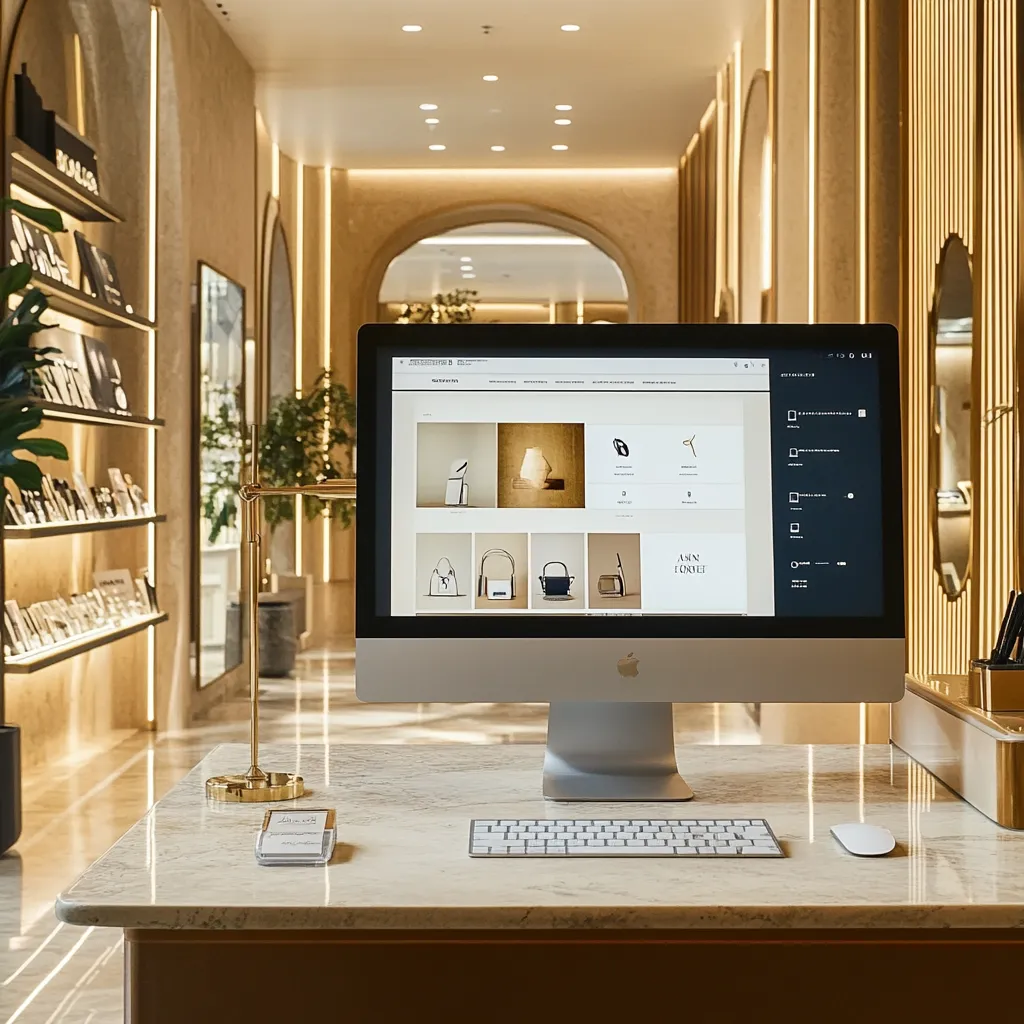
Aligning Online and In-Store Experiences in Luxury Retail
In 2025's competitive luxury retail landscape, 73% of shoppers use multiple channels before making a purchase—and they expect seamless consistency at every touchpoint Immerss. For San Francisco's discerning luxury market, where innovation meets exceptional taste, the gap between your online presence and physical store experience can make or break customer loyalty. Brands with strong omnichannel strategies achieve 30% higher lifetime customer value and experience 179% faster revenue growth compared to single-channel competitors Marketing LTB. Yet many luxury retailers struggle to create this seamless connection. The question isn't whether you should bridge this gap—it's how to do it strategically, authentically, and profitably.
Why Omnichannel Excellence Matters More Than Ever in 2025
Picture this scenario playing out daily across San Francisco's Union Square: A prospective client discovers your luxury brand on Instagram, visits your beautifully designed website, reads glowing reviews, and arrives at your boutique excited to experience what they've seen online. Instead, they encounter inconsistent messaging, different quality standards, and a disconnect between your digital promises and physical delivery. Within minutes, that carefully cultivated brand perception shatters.
This isn't a hypothetical situation—it's the reality for luxury retailers who haven't prioritized omnichannel alignment. Research from Deloitte's 2025 Retail Outlook reveals that 75% of shoppers now move fluidly between digital and physical touchpoints in a single customer journey HireHoratio. When these touchpoints tell contradictory stories, customers experience cognitive dissonance that directly impacts purchase decisions and long-term loyalty.
The Financial Impact of Misalignment:
Lost Revenue: Omnichannel retailers report 179% faster revenue growth than fragmented competitors
Customer Lifetime Value: Seamless experiences deliver 30% higher CLV through increased repeat purchases
Brand Perception: 86% of customers will abandon a brand after just 2-3 poor experiences across channels
Competitive Disadvantage: San Francisco's luxury market attracts sophisticated consumers who instantly recognize inconsistency
For luxury businesses operating in California's innovation capital, where customer expectations are shaped by interactions with world-class tech companies and premium retailers, the bar for experiential excellence sits exceptionally high. Your customers don't just compare you to competitors in your category—they compare you to the best experiences they've had across all industries.
The 8 Pillars of Omnichannel Excellence for Luxury Retail
Creating seamless alignment between online and in-store experiences requires strategic thinking across eight interconnected dimensions. Think of these pillars as the architectural foundation supporting your entire brand experience—neglect any single element, and the structure weakens.
1. Visual Identity Consistency: Your Brand's Visual Language
Your visual identity functions as a silent ambassador, communicating brand values before customers read a single word. In 2025's visually saturated marketplace, consistency across channels isn't optional—it's fundamental to brand recognition and trust-building.
Strategic Implementation:
Professional Photography Standards: Invest in high-resolution, professionally shot imagery that maintains consistent lighting, styling, and aesthetic across all platforms. Your e-commerce product photography should mirror the lighting quality and composition customers experience when viewing merchandise in your boutique. Consider establishing a brand photography guide specifying:
Lighting ratios and temperature: Maintain consistent color accuracy (85-90 CRI minimum)
Background treatments: Seamless white, textured surfaces, or environmental contexts that align with in-store ambiance
Styling conventions: Props, models, and presentation methods that reflect your physical merchandising approach
Image resolution standards: Minimum 2000x2000 pixels for product images to support zoom functionality
Color Palette Precision: Digital color representation poses technical challenges—what appears as rich burgundy on your website might display as muddy brown on certain devices. Implement:
Color management systems: Use sRGB color space for web displays; CMYK profiles for print materials
Device testing protocols: View your website and digital assets across multiple devices (smartphones, tablets, desktop monitors) under various lighting conditions
In-store digital displays: Calibrate monitors and digital signage to match online color presentations
Print material coordination: Ensure business cards, packaging, and marketing collateral use exact PMS color specifications
Typography Hierarchy: Fonts communicate personality—serif typefaces convey tradition and sophistication; sans-serif fonts project modernity and clarity. Maintain absolute consistency:
Primary typeface: Use identical font families online and in printed materials
Hierarchy standards: Establish and document heading sizes (H1, H2, H3), body text specifications, and accent typography
Licensing compliance: Ensure web font licenses cover all digital applications
San Francisco Context: Bay Area luxury consumers interact with brands like Apple, Salesforce, and Meta daily—companies renowned for meticulous visual consistency. Your brand's visual coherence directly impacts perceived professionalism in this visually sophisticated market.
2. Website Design Excellence: Your Digital Flagship
Your website functions as your brand's 24/7 flagship location—potentially reaching more customers annually than your physical store. In 2025, website expectations have evolved beyond "mobile-friendly" to "mobile-first" experiences that anticipate user needs.
Key Design Principles:
Intuitive Navigation Architecture: Mirror your physical store's intuitive layout digitally. If customers enter your boutique and immediately understand your collection organization (ready-to-wear left, accessories center, made-to-order right), your website navigation should provide equivalent clarity. Implement:
Mega-menus: Display full category hierarchies without requiring multiple clicks
Visual navigation: Use imagery-based navigation for collections and categories
Breadcrumb trails: Help users understand their location within your site structure
Persistent search functionality: Provide instant access to search from every page
Page Load Speed Optimization: Google's 2025 Core Web Vitals prioritize speed as a ranking factor—and luxury customers expect instantaneous performance. Target metrics:
Largest Contentful Paint (LCP): Under 2.5 seconds
First Input Delay (FID): Under 100 milliseconds
Cumulative Layout Shift (CLS): Under 0.1
Technical implementations include image compression (WebP format), lazy loading for below-fold content, content delivery networks (CDNs), and code minification.
Luxury-Specific Design Elements:
Generous white space: Convey exclusivity through uncluttered layouts
Sophisticated micro-interactions: Subtle animations that delight without distracting
High-quality video integration: Showcase products, craftsmanship, and brand stories through professionally produced video content
Virtual showroom experiences: 360-degree product views, AR try-on capabilities, and interactive lookbooks
Accessibility Excellence: Luxury brands sometimes overlook accessibility, assuming their market skews younger and tech-savvy. However, 26% of U.S. adults live with disabilities—and accessibility improvements benefit all users. Ensure WCAG 2.1 AA compliance through:
Alt text: Descriptive text for all images supporting screen readers
Keyboard navigation: Full site functionality without mouse/trackpad
Sufficient color contrast: Minimum 4.5:1 ratio for text
Closed captions: For all video content
3. Content Strategy: Speaking Your Brand's Language
Content represents your brand's voice—the personality customers connect with emotionally. Inconsistent messaging destroys trust faster than inconsistent visuals because it suggests your brand doesn't understand its own identity.
Establishing Voice & Tone Guidelines:
Create comprehensive documentation specifying:
Voice Characteristics (Remain Consistent):
Sophistication level: Refined without pretension? Aspirational yet approachable?
Formality spectrum: First-person vs. third-person perspective; contracted forms ("we're") vs. formal constructions ("we are")
Personality traits: Witty? Authoritative? Empathetic? Innovative?
Tone Variations (Adapt to Context): While voice remains constant, tone adapts to situation:
Product descriptions: Informative, highlighting craftsmanship and materials
Social media: Conversational, engaging, responsive to community
Customer service: Empathetic, solution-oriented, gracious
Marketing campaigns: Inspirational, aspirational, emotionally resonant
Content Depth & Substance:
Luxury customers research extensively before purchasing—particularly for investment pieces. Provide comprehensive information that demonstrates expertise:
Product Descriptions: Move beyond basic specifications to storytelling:
Origin narratives: Where materials are sourced; artisan stories
Craftsmanship details: Construction methods, hours of labor, quality differentiators
Care instructions: Maintain product longevity through proper maintenance
Styling suggestions: How to incorporate items into broader wardrobes or lifestyles
Editorial Content: Position your brand as a category authority through:
Trend analysis: Interpret emerging movements for your audience
How-to guides: Practical advice relevant to your products/services
Behind-the-scenes content: Manufacturing processes, designer interviews, brand heritage
Customer spotlights: Real clients sharing authentic experiences
San Francisco Application: The Bay Area values substance over style, authenticity over affectation. Content that demonstrates deep expertise, ethical sourcing, and genuine innovation resonates powerfully in this market.
4. Brand Voice Consistency Across Every Touchpoint
Your brand voice extends far beyond your website and printed materials—it manifests in every customer interaction, from automated email responses to staff conversations on the sales floor.
Omnichannel Voice Integration:
Email Communications:
Transactional emails: Order confirmations, shipping updates, and receipts should reflect brand personality while prioritizing clarity
Marketing emails: Subject lines, preview text, body copy, and calls-to-action maintain voice consistency
Abandoned cart sequences: Persuasive without being pushy; helpful without being desperate
Social Media Management: Each platform has distinct culture, but your brand voice remains recognizable:
Instagram: Visual storytelling with captions that provide context and emotion
LinkedIn: Professional thought leadership demonstrating industry expertise
Facebook: Community-building through responsive engagement
Pinterest: Aspirational lifestyle curation with descriptive, keyword-rich text
In-Store Communication: Train staff to embody brand voice verbally:
Greeting protocols: Formal welcome vs. casual acknowledgment
Product presentations: Technical specifications vs. lifestyle benefits emphasis
Objection handling: Addressing concerns while maintaining brand personality
Closing conversations: Memorable farewells that reinforce brand experience
Packaging & Unboxing: The physical unboxing experience communicates brand values powerfully:
Packaging materials: Sustainable options reflecting environmental values
Printed materials: Care cards, thank-you notes, brand story inserts
Sensory details: Tissue paper quality, ribbon choices, signature scents
Crisis Communication: When problems arise (delayed shipments, quality issues, service failures), consistent voice builds trust through transparency:
Acknowledgment: Validate customer frustration without defensive language
Accountability: Accept responsibility for controllable failures
Action: Communicate concrete solutions and compensation
Follow-through: Confirm resolution and appreciation
5. Technology Integration: Seamless Digital-Physical Bridges
In 2025, the distinction between "online" and "offline" shopping has dissolved—customers expect fluid movement between channels without friction. Technology enables this seamlessness when implemented strategically.
Essential Integration Technologies:
Unified Inventory Management: Nothing frustrates luxury shoppers more than discovering online that a coveted item is "in stock" only to find it unavailable upon store visit. Implement real-time inventory synchronization:
RFID tagging: Track merchandise location across warehouses, stores, and e-commerce fulfillment
Reserve online, pick up in-store (ROPIS): Allow customers to secure items digitally and collect personally
Ship-from-store capabilities: Fulfill online orders from store inventory to accelerate delivery
Inventory visibility: Show real-time availability on product pages with store-specific stock levels
Clienteling & CRM Systems: San Francisco's luxury market thrives on personalization—technology empowers staff to deliver individually tailored experiences:
Purchase history access: Sales associates view previous purchases across all channels
Preference profiles: Document style preferences, sizing details, communication preferences
Occasion reminders: Birthday alerts, anniversary notifications, seasonal wardrobe updates
Cross-channel recognition: Customers receive personalized service regardless of entry point
Mobile-First Solutions: The smartphone functions as the universal remote control for modern shopping:
Mobile-optimized website: Responsive design ensuring full functionality on smaller screens
Native mobile app (when appropriate): For brands with sufficient audience to justify development investment
Mobile payment options: Apple Pay, Google Pay, contactless payment processing
QR code integration: Link physical products to digital content (styling videos, origin stories, care instructions)
Augmented Reality (AR) Applications: Technology increasingly bridges the "try before you buy" gap for online shoppers:
Virtual try-on: Sunglasses, jewelry, watches visualized on user's image
Room visualization: Furniture, artwork, home décor placed in customer's actual space
Size comparison: Scale visualization helping customers understand product dimensions
AI-Powered Personalization: Machine learning algorithms analyze behavior patterns to customize experiences:
Product recommendations: Based on browsing history, purchase patterns, and similar customer behaviors
Dynamic content: Homepage layouts adjust based on individual preferences
Predictive search: Anticipate search queries based on partial inputs and user history
Chatbot assistance: 24/7 support for common questions, appointment scheduling, and product discovery
6. Customer Service Excellence Across All Channels
Service quality defines luxury retail—customers pay premium prices expecting premium treatment. Inconsistent service across channels undermines this fundamental value proposition.
Service Standard Development:
Response Time Expectations: Establish and communicate clear response standards:
Phone inquiries: Answer within 3 rings; resolve within first call when possible
Email inquiries: Acknowledge within 2 hours; resolve within 24 hours
Social media comments: Respond within 1 hour during business hours
Live chat: Immediate connection; resolution within 10 minutes
In-store assistance: Greeting within 30 seconds; dedicated attention without rush
Service Training Protocols: Every team member represents your brand—training ensures consistency:
Product Knowledge:
Material specifications: Fabric content, construction methods, care requirements
Brand heritage: Founder stories, design philosophy, signature elements
Collection contexts: How current offerings relate to brand evolution
Competitive differentiation: What makes your products uniquely valuable
Service Techniques:
Active listening: Understand customer needs before proposing solutions
Consultative selling: Match products to customer lifestyles rather than pushing inventory
Objection handling: Address concerns without discounting or dismissing
Relationship building: Focus on long-term relationships over transactional sales
Empowerment Guidelines: Define decision-making authority for service recovery:
Discount limits: When can staff offer percentage reductions?
Refund policies: What circumstances warrant exceptions to standard policies?
Complimentary services: Alterations, repairs, expedited shipping authority
Escalation protocols: When to involve management for complex situations
7. Data-Driven Optimization: Measuring What Matters
Intuition matters in luxury retail, but data prevents expensive mistakes and identifies improvement opportunities invisible to subjective observation.
Key Performance Indicators (KPIs) for Omnichannel Success:
Cross-Channel Metrics:
Channel attribution: Which touchpoints influence purchases? (Google Analytics 4, attribution modeling)
Path to purchase: Common customer journeys from discovery to conversion
Channel switching rates: How frequently do customers move between online and offline?
Cross-channel customer lifetime value: Do omnichannel customers spend more than single-channel customers?
Website Analytics:
Traffic sources: Organic search, paid advertising, social media, direct, referral
Bounce rate: Percentage of single-page visits (target: <40% for luxury retail)
Average session duration: Time spent on site (target: 3+ minutes for engaged shoppers)
Conversion rate: Percentage of visitors completing purchases (luxury retail average: 1-3%)
Cart abandonment rate: Percentage of initiated purchases not completed (target: <70%)
In-Store Metrics:
Foot traffic patterns: Peak hours, day-of-week variations, seasonal trends
Conversion rate: Percentage of visitors making purchases
Average transaction value: Total sales divided by number of transactions
Items per transaction: Indicator of successful cross-selling
Return visit rate: Percentage of customers making repeat purchases
Customer Satisfaction Measures:
Net Promoter Score (NPS): Likelihood customers recommend your brand (luxury target: 70+)
Customer Satisfaction Score (CSAT): Post-interaction satisfaction ratings
Customer Effort Score (CES): Ease of completing desired actions
Review sentiment analysis: Qualitative feedback themes from online reviews
A/B Testing Opportunities: Systematically test variables to optimize performance:
Email subject lines: Which messaging generates higher open rates?
Product page layouts: How does image quantity/quality affect conversion?
Pricing presentation: Displaying monthly payment options vs. total price
Call-to-action buttons: Color, placement, and language testing
8. Sustainability & Ethical Storytelling: Values Alignment
San Francisco's conscious consumers increasingly evaluate brands through ethical and environmental lenses. In 2025, 67% of luxury buyers consider sustainability when making purchase decisions—and this percentage skews higher in California's environmentally aware market Bain & Company.
Authentic Sustainability Communication:
Supply Chain Transparency:
Material sourcing: Document origin of fabrics, leathers, metals, gemstones
Manufacturing locations: Showcase artisan partnerships and fair labor practices
Certifications: Display relevant credentials (Fair Trade, GOTS, B Corp, Carbon Neutral)
Traceability technology: QR codes linking to product journey documentation
Environmental Impact Reduction:
Packaging sustainability: Recyclable, compostable, or reusable packaging materials
Carbon offsetting: Neutralize shipping emissions through verified programs
Circular economy initiatives: Product repair services, trade-in programs, vintage collections
Digital-first strategies: Reduce physical marketing materials through digital alternatives
Social Responsibility:
Community engagement: Partnerships with San Francisco nonprofits and social enterprises
Diversity commitments: Supplier diversity, inclusive marketing, equitable hiring practices
Living wages: Commitment to fair compensation throughout supply chain
Philanthropic initiatives: Percentage-of-sales donations to aligned causes
Storytelling Authenticity: Avoid greenwashing through specific, verifiable claims:
❌ Vague: "We care about the environment"
✅ Specific: "Our packaging uses 100% recycled materials and is fully compostable; 2% of revenue supports ocean conservation"
Top 7 Strategies for Aligning Your Digital and Physical Presence
Moving from theory to practice requires systematic implementation. These seven strategies provide actionable pathways to omnichannel excellence.
1. Audit Your Current Omnichannel Experience
Conduct Mystery Shopping: Experience your brand as a customer would:
Online journey: Navigate your website as a first-time visitor seeking specific products
In-store visit: Visit your physical location without staff recognition
Cross-channel interaction: Browse online, call with questions, visit to purchase
Post-purchase experience: Assess packaging, follow-up communications, potential returns
Document Discrepancies: Create detailed notes on inconsistencies:
Visual differences (colors, imagery styles, quality levels)
Messaging contradictions (brand personality, value propositions)
Service gaps (response times, knowledge depth, hospitality standards)
Technical friction (inventory inaccuracy, payment complications)
2. Develop Comprehensive Brand Guidelines
Create Living Documentation: Rather than static PDF brand books, develop accessible digital guidelines that evolve:
Visual Standards:
Logo usage rules (sizing, spacing, color variations, prohibited alterations)
Color specifications (RGB, CMYK, Pantone, hex codes)
Typography system (primary, secondary, accent fonts with usage contexts)
Photography style guide (lighting, composition, subject matter, editing parameters)
Graphic elements (patterns, textures, iconography, illustration styles)
Voice & Messaging:
Brand personality descriptors
Vocabulary preferences ("clients" vs. "customers," "purchase" vs. "buy")
Prohibited language (clichés, jargon, overused luxury descriptors)
Sample messaging for common scenarios
Tone variations across contexts
Customer Experience Standards:
Service scripts for common interactions
Response templates maintaining brand voice
Problem resolution protocols
Surprise-and-delight opportunities
3. Implement Regular Brand Training
Onboarding Programs: New team members receive comprehensive brand immersion:
Brand history and heritage
Product knowledge fundamentals
Service standards and expectations
Technology systems training
Role-playing customer scenarios
Ongoing Education: Quarterly training sessions maintaining consistency:
New collection launches (product knowledge, storytelling points)
Seasonal marketing themes (campaign messaging, promotional offers)
Technology updates (new features, system changes)
Service excellence refreshers (reviewing standards, sharing best practices)
Cross-Functional Exposure: Encourage understanding across departments:
Retail staff shadow e-commerce team
Marketing team experiences sales floor
Customer service representatives visit stores
E-commerce team attends trunk shows
4. Leverage Technology for Consistency
Content Management Systems (CMS): Centralize content to ensure accuracy:
Product information management (PIM) systems storing authoritative product data
Digital asset management (DAM) platforms housing approved imagery
Single source of truth for pricing, descriptions, specifications
Marketing Automation: Systematize customer communications:
Email sequences triggered by behaviors (welcome series, abandoned carts, post-purchase follow-ups)
Birthday and anniversary automations
Personalized product recommendations
Re-engagement campaigns for inactive customers
Training & Communication Platforms: Keep dispersed teams aligned:
Learning management systems (LMS) hosting training modules
Internal communication tools (Slack, Microsoft Teams) for real-time updates
Digital playbooks accessible via mobile devices on sales floors
5. Create Seamless Cross-Channel Experiences
Buy Online, Pick Up In-Store (BOPIS): Convenience without compromising experience:
Designated pick-up area maintaining boutique ambiance
Express processing (target: under 5 minutes from arrival to departure)
Upsell opportunities (complementary products tastefully suggested)
Personalized packaging even for pick-up orders
Virtual Appointments: Extend personal service digitally:
Video consultations for remote customers
Screen sharing for website navigation assistance
Virtual styling sessions showcasing collections
Private shopping experiences via livestream
Endless Aisle: Never lose a sale due to inventory constraints:
In-store tablets accessing full online catalog
Ship-to-home from any location
Special order capabilities for out-of-stock items
Transparency about delivery timelines
6. Personalize at Scale
Data Collection & Usage: Gather information that enables customization:
Purchase history and frequency
Product preferences and sizing
Communication channel preferences
Lifestyle indicators (occasions, interests, values)
Segmentation Strategies: Group customers by meaningful characteristics:
VIP clients: Highest lifetime value; exclusive previews, invitations, services
Style segments: Minimalist, maximalist, classic, trendy preferences
Occasion shoppers: Holiday, wedding, special event purchasers
Engagement levels: Frequent browsers, repeat purchasers, lapsed customers
Automated Personalization: Technology enables individual attention at scale:
Dynamic website content displaying relevant products
Personalized email recommendations
Customized re-targeting advertising
Individualized loyalty program rewards
7. Monitor, Measure, and Iterate
Establish Baseline Metrics: You can't improve what you don't measure:
Current conversion rates (online and in-store)
Average order value across channels
Customer acquisition cost by channel
Net Promoter Score
Customer lifetime value
Regular Performance Reviews: Schedule consistent analysis:
Weekly: Sales performance, traffic patterns, inventory levels
Monthly: Marketing ROI, channel attribution, customer feedback themes
Quarterly: Strategic goal progress, competitive analysis, technology evaluation
Annually: Comprehensive brand audit, long-term strategy refinement
Customer Feedback Integration: Systematically incorporate voice of customer:
Post-purchase surveys (email NPS surveys 48 hours after delivery/purchase)
Review monitoring (Google, Yelp, social media)
Focus groups (quarterly sessions with diverse customer segments)
Advisory boards (invite top clients to provide strategic input)
San Francisco-Specific Considerations for Luxury Retail
Operating in San Francisco presents unique opportunities and challenges distinct from other luxury markets. Understanding local context ensures your omnichannel strategy resonates with Bay Area sensibilities.
Tech-Savvy Sophistication: San Francisco consumers work in technology industries—they recognize and appreciate technical excellence while having low tolerance for subpar digital experiences. Your website's performance, your app's intuitiveness, and your technology integrations face scrutiny from customers who build similar products professionally.
Values-Driven Purchasing: More than most luxury markets, San Francisco shoppers evaluate brands through ethical lenses. Supply chain transparency, environmental sustainability, diversity commitments, and community engagement significantly influence purchasing decisions—particularly among younger luxury consumers entering their peak earning years.
Neighborhood Considerations: San Francisco's distinct neighborhoods attract different luxury consumer segments:
Union Square: Tourists, established professionals, traditional luxury expectations
Hayes Valley: Design-forward locals, independent boutique preferences, artisanal appreciation
Pacific Heights: Ultra-high-net-worth residents, discretion valued, personalized service essential
Mission District: Creative professionals, authentic storytelling resonates, value sustainability
Competitive Landscape: Bay Area luxury consumers access world-class shopping in San Francisco, Palo Alto, and Marin County. Your omnichannel experience competes not just with direct competitors but with every premium retail interaction these sophisticated shoppers encounter.
Conclusion: Building the Future of Luxury Retail
The gap between your online and in-store experiences isn't just a technical challenge—it's a strategic imperative that directly impacts revenue, customer loyalty, and competitive positioning. In San Francisco's sophisticated luxury market, where 73% of shoppers use multiple channels before purchasing and omnichannel excellence drives 30% higher customer lifetime value, seamless alignment represents the difference between thriving and merely surviving.
The eight pillars of omnichannel excellence—visual identity consistency, website design, content strategy, brand voice, technology integration, customer service, data-driven optimization, and values alignment—provide the framework for systematic improvement. Combined with the seven implementation strategies, these principles transform abstract concepts into concrete actions generating measurable results.
The luxury retail landscape continues evolving rapidly. AI personalization, augmented reality shopping, voice commerce, and technologies yet to emerge will introduce new channels and touchpoints. However, the fundamental principle remains constant: customers expect your brand to deliver consistent, exceptional experiences regardless of how they choose to engage. Master this principle today, and you'll adapt successfully to whatever channels tomorrow brings.
Author Bio: Tracey Bauer is an AI Consultant and Digital Marketing Specialist helping luxury businesses create seamless omnichannel experiences that drive customer loyalty and revenue growth. With expertise in HIPAA-compliant CRM systems and multi-platform integration, Tracey partners with San Francisco's luxury retail community to bridge the gap between digital innovation and timeless customer service excellence. Connect with Lens on Luxury to discover how strategic omnichannel alignment can transform your business.
Ready to align your online and in-store experiences for maximum impact? Contact Lens on Luxury for a comprehensive omnichannel audit and customized implementation roadmap.
FAQ SECTION (8 Questions)
1. What is omnichannel retail and why does it matter for luxury brands?
Omnichannel retail creates seamless, integrated experiences across all customer touchpoints—online, in-store, mobile, and social media. For luxury brands, it matters because 73% of shoppers use multiple channels before purchasing, and brands with strong omnichannel strategies achieve 30% higher customer lifetime value and 179% faster revenue growth than single-channel competitors.
2. How do I ensure brand consistency between my website and physical store?
Maintain consistency through comprehensive brand guidelines covering visual identity (logo usage, color specifications, typography, photography standards), voice and messaging (personality traits, vocabulary preferences, tone variations), and customer experience standards. Implement centralized content management systems ensuring single sources of truth for product information, imagery, and pricing.
3. What technologies help bridge online and offline retail experiences in 2025?
Essential technologies include unified inventory management systems with real-time synchronization, clienteling/CRM platforms providing cross-channel customer recognition, mobile-optimized websites and apps, augmented reality for virtual try-on, AI-powered personalization engines, and point-of-sale systems integrating with e-commerce platforms for seamless transaction processing.
4. How can small luxury retailers compete with larger brands' omnichannel capabilities?
Small retailers possess advantages in personalization, agility, and authentic relationships. Leverage affordable technology platforms (Shopify Plus, Lightspeed, Klaviyo) providing enterprise-grade omnichannel functionality at accessible price points. Focus on exceptional customer service, community connection, and unique brand storytelling that large competitors struggle to replicate.
5. What metrics should I track to measure omnichannel success?
Key metrics include cross-channel attribution (which touchpoints influence purchases), customer lifetime value by channel, conversion rates online and in-store, cart abandonment rates, Net Promoter Score (NPS), average order value across channels, return visit rates, and channel switching patterns. Monitor these monthly to identify trends and optimization opportunities.
6. How important is sustainability messaging in aligning online and offline experiences for San Francisco luxury shoppers?
Critically important—67% of luxury buyers consider sustainability when making purchases, with higher percentages among California's environmentally conscious consumers. Ensure sustainability commitments are equally visible online and in-store through supply chain transparency documentation, packaging materials, carbon offset programs, and circular economy initiatives like repair services and trade-in programs.
7. What are the biggest mistakes luxury retailers make when creating omnichannel experiences?
Common mistakes include inconsistent pricing across channels, inventory inaccuracies causing customer frustration, differing return policies online versus in-store, fragmented customer data preventing personalization, undertrained staff unable to access online order information, and treating e-commerce as separate business rather than integrated component of unified brand experience.
8. How do I train staff to maintain brand consistency across all customer interactions?
Develop comprehensive onboarding programs covering brand heritage, product knowledge, service standards, and technology systems. Conduct quarterly training sessions for new collections, seasonal campaigns, and service excellence refreshers. Create accessible digital playbooks with response templates, service scripts, and brand voice examples. Encourage cross-functional exposure so staff understand full customer journey across all touchpoints.